

Physician’s CV >>
Follow us

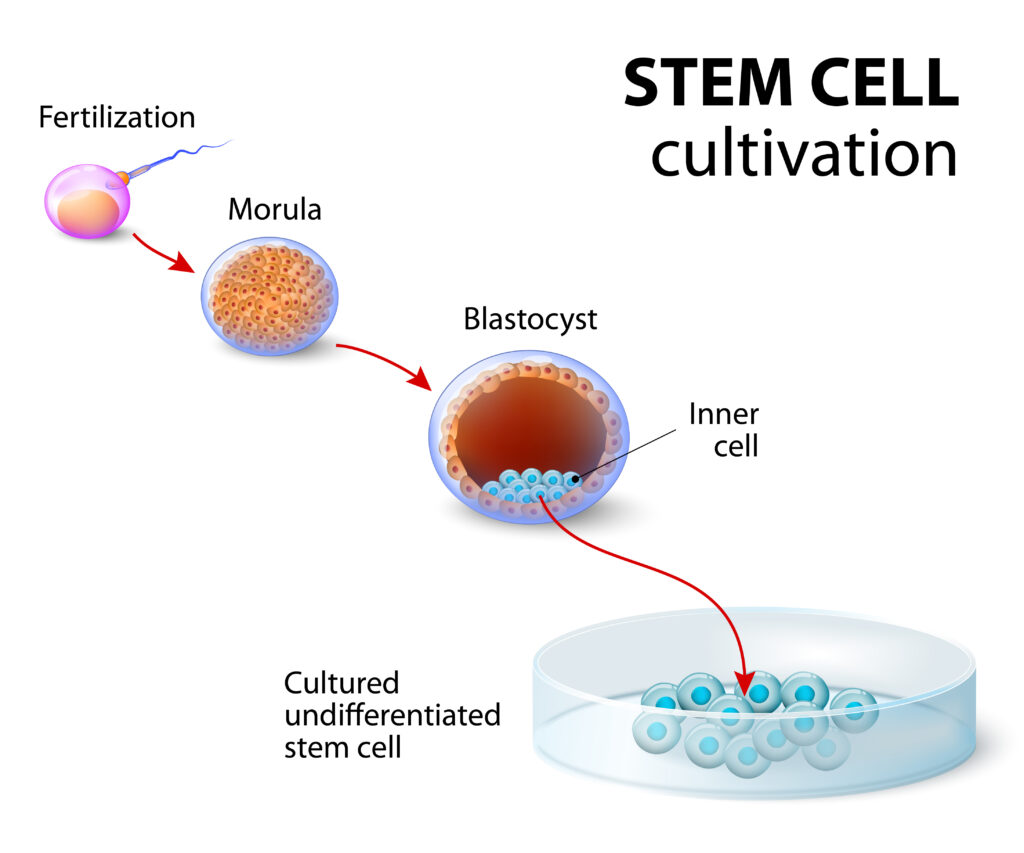
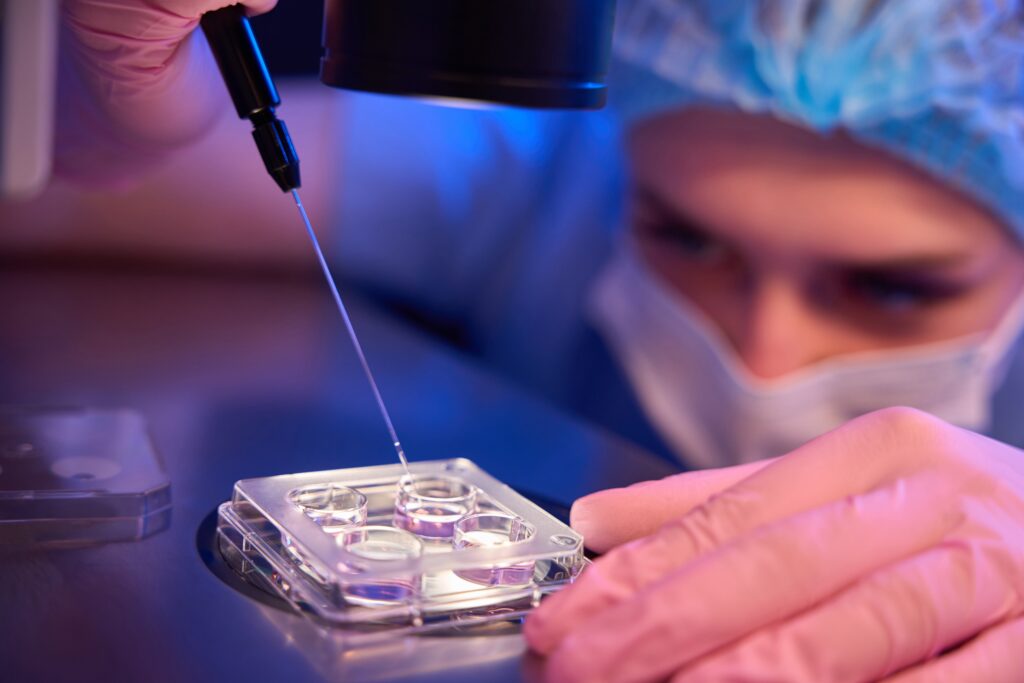
During the in vitro fertilization (IVF) process, fertilized eggs are not transferred directly into the uterus. Instead, they are cultured in specialized culture media for 5 to 6 days until they reach the blastocyst stage, which is associated with the highest implantation potential.
Therefore, blastocyst culture serves as a method of natural embryo selection, allowing the identification of embryos with the greatest likelihood of implantation. In addition, it enables a thorough assessment of embryo quality prior to embryo transfer and may improve the overall success rates of IVF treatment.
A blastocyst is an early stage in embryo development. It is a cluster of cells that forms approximately five days after fertilization. A blastocyst consists of 70 to 200 cells, significantly more than a Day 3 embryo.
It comprises the inner cell mass, which will eventually develop into the fetus, and the trophectoderm, which will later form the placenta. Simply put, the blastocyst stage represents the final phase of embryo development before the implantation process in the uterus begins.
Blastocysts are not evaluated in the same way as Day 3 embryos. Their assessment is primarily based on the degree of blastocyst expansion, as well as the quality of the inner cell mass and the trophectoderm.
This evaluation classifies each blastocyst according to a morphological grading system, which is often associated with its implantation potential. Such grading helps embryologists select the most suitable embryos for transfer. However, embryo morphology does not necessarily reflect its genetic status. As a result, morphologically excellent blastocysts may still carry chromosomal abnormalities, while embryos with lower morphological grades may have entirely normal genetic material.
Blastocyst culture is recommended when there is a sufficient number of good-quality embryos available. More specifically, it is generally advised when at least four embryos are present on Day 3 of development. Under these circumstances, extending embryo culture to the blastocyst stage maximizes the chances of a successful embryo transfer.
In addition, blastocyst culture is considered essential when preimplantation genetic testing (PGT) is planned, as it allows embryo biopsy to be performed for genetic analysis with minimal risk to the embryo.
Blastocyst culture offers significant advantages in the context of in vitro fertilization (IVF). It enables the selection of embryos with the highest implantation potential, thereby maximizing the chances of achieving pregnancy while minimizing the number of embryo transfer procedures required.
In addition, blastocyst culture allows for the transfer of a smaller number of embryos, reducing the risk of multiple pregnancy.
Blastocyst culture is also particularly beneficial when preimplantation genetic testing (PGT) is indicated, such as in couples with a known history of genetic disorders or in cases of recurrent implantation failure.


Blastocyst culture represents one of the most important advances in modern assisted reproductive technology, as it allows for a more accurate assessment and selection of embryos with the highest developmental potential, thereby improving the success rates of in vitro fertilization (IVF). However, the decision to extend embryo culture to Day 5 or Day 6 should always be individualized, taking into account the specific medical characteristics of each case.
For specialized guidance and support throughout every stage of the IVF journey, Obstetrician–Gynecologist Dr. Ioannis Raptis and his team are at your disposal. Contact us to learn more and discuss the treatment options best suited to your needs.

Χρησιμοποιούμε cookies για να βελτιώσουμε την εμπειρία σας στον ιστότοπό μας. Χρησιμοποιώντας τον ιστότοπό μας, συναινείτε στη χρήση cookies.
Manage your cookie preferences below:
Essential cookies enable basic functions and are necessary for the proper function of the website.