

Ο Ιωάννης Ράπτης διαθέτει κλινική εμπειρία από τη θέση του Επιμελητή Ά του γερμανικού περιγεννητικού κέντρου AΚΗ Hagen. Εκεί έλαβε πλήρη εκπαίδευση στον τομέα Ειδική Μαιευτική και Περιγεννητική Ιατρική (Spezielle Geburtshilfe und Perinatal Medizin) και εξειδικεύτηκε στις κυήσεις υψηλού κινδύνου και τους επιπλεγμένους τοκετούς.
Ακολουθήστε μας

Intrauterine Growth Restriction (IUGR) is a condition in which the fetus does not grow at the expected rate for its gestational age while in the womb. In most cases, this occurs because the placenta is unable to provide the fetus with an adequate supply of oxygen and nutrients. As a result, the fetus has an estimated weight that is significantly lower than the average for the corresponding week of pregnancy.

Early-onset IUGR develops before 32 weeks of pregnancy and is associated with more severe placental dysfunction. In most cases, the fetus is symmetrically small, meaning that the head, abdomen, and the rest of the body are all proportionally smaller than expected for the gestational age.
Late-onset IUGR develops after 32 weeks of pregnancy and is usually associated with milder placental dysfunction. In these cases, the fetus is more commonly asymmetrically small, meaning that the abdomen and the rest of the body are proportionally smaller than expected, while the head size remains closer to the normal range for the gestational age.
In most cases, intrauterine growth restriction is caused by an inadequate supply of oxygen and nutrients to the fetus through the placenta. This usually occurs when the placenta does not implant properly into the uterine wall, reducing its ability to support normal fetal growth and development.
Other possible causes and risk factors include:


The suspicion of intrauterine growth restriction usually arises during a fetal growth ultrasound. This examination estimates the fetus’s weight by taking specific biometric measurements of the head, abdomen, and femur.
IUGR is suspected when the estimated fetal weight is significantly lower than expected for the gestational age or when serial ultrasound examinations show that the fetus is no longer following its expected growth curve. Additional information is obtained by assessing the amount of amniotic fluid, as well as the appearance and degree of maturation of the placenta.
A Doppler ultrasound also plays a crucial role in the diagnosis and monitoring of IUGR. This examination evaluates blood flow in the fetal blood vessels, allowing the obstetrician to accurately assess the severity of the condition, make informed clinical decisions, and determine the most appropriate timing and mode of delivery.
The frequency of follow-up examinations is individualized and depends primarily on the severity of the findings and the overall course of the pregnancy.
In pregnancies complicated by intrauterine growth restriction, the timing and mode of delivery depend on several factors, including:
The primary goal is twofold: to prolong the pregnancy for as long as it is safe in order to allow further fetal maturation, while at the same time avoiding the risks associated with prolonged intrauterine hypoxia, such as fetal death or permanent neurological injury.
Two important gestational milestones guide the management of IUGR:

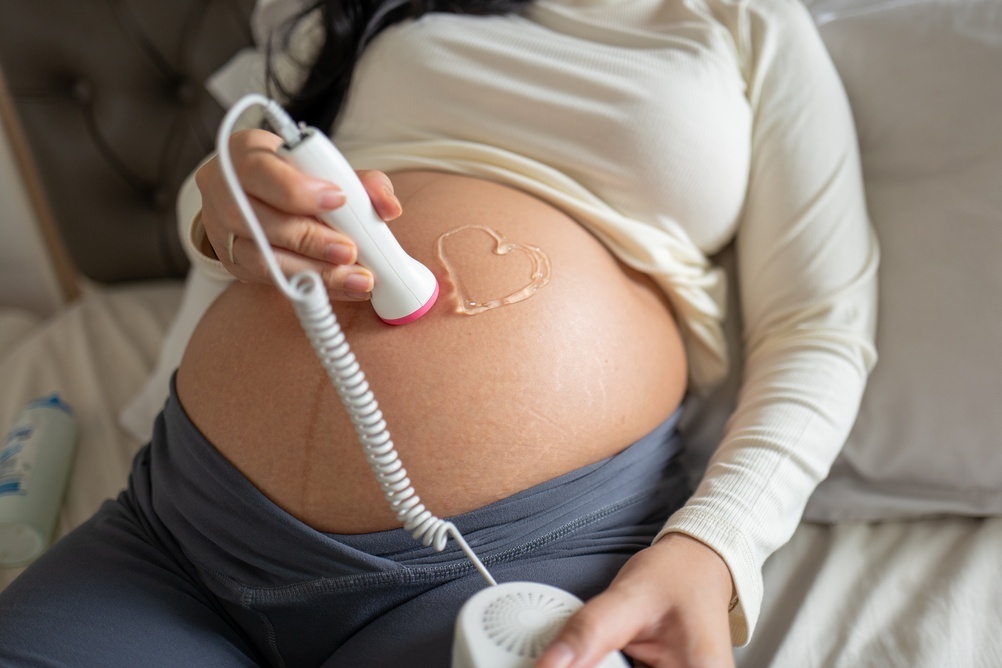
Various medical interventions have been studied over the years for the prevention and treatment of intrauterine growth restriction.
To date, the only intervention that has been shown to significantly reduce the risk of placental dysfunction and its associated complications is the administration of low-dose aspirin to women at high risk, provided that treatment is initiated early in pregnancy.
In contrast, the use of low-molecular-weight heparin (LMWH) solely for the prevention or treatment of IUGR has not been shown to improve fetal growth or pregnancy outcomes.
For expert guidance and comprehensive care throughout your pregnancy, obstetrician–gynecologist Ioannis Raptis and his team are here to support you every step of the way. Contact us to schedule a consultation.

Χρησιμοποιούμε cookies για να βελτιώσουμε την εμπειρία σας στον ιστότοπό μας. Χρησιμοποιώντας τον ιστότοπό μας, συναινείτε στη χρήση cookies.
Manage your cookie preferences below:
Essential cookies enable basic functions and are necessary for the proper function of the website.