
Rectangle 174

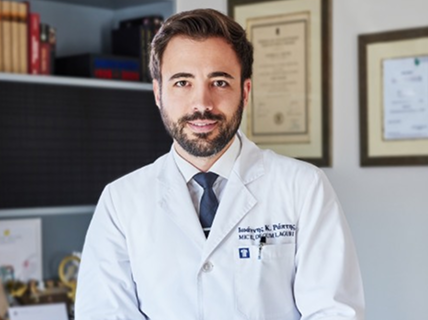
Ioannis Raptis MIC II, DEGUM I, AGUB I

Obstetrician - Gynecologist

Ioannis K. Raptis is an accredited physician (MIC II) certified to perform advanced laparoscopic and hysteroscopic procedures by the German Society for Gynecological Endoscopy (AGE). The majority of patients have the option to undergo laparoscopic-robotic procedures without hospitalization.

Doctor’s CV >>

Follow us

Λαπαροσκοπική θεραπεία κυστεοκήλης χωρίς πλέγμα

Laparoscopic treatment of cystocele without mesh

Cystocele is a common condition that significantly affects the daily life of many women, causing discomfort, irritation, and problems with urination and sexual activity. Modern minimally invasive techniques have radically changed the way this condition is treated, offering safe and long-lasting results. Among these, laparoscopic cystocele repair without the use of mesh stands out as a safe and reliable method, restoring the vaginal anatomy without using foreign materials.


What is a cystocele?

A cystocele, also known as a bladder prolapse, is a condition in which the bladder slips toward the vaginal opening due to weakening or damage of the supporting tissues. The front wall of the vagina bulges outward, creating a distinct sensation of pressure, a foreign body feeling, or heaviness in the perineal area.

The condition is relatively common in women, especially after menopause. It can coexist with uterine prolapse or rectocele, as the same anatomical structures are involved in supporting the other pelvic organs.

A cystocele is not merely a cosmetic issue. If left untreated, it can lead to serious complications, such as urinary retention, frequent infections, and vaginal tissue damage.

Lorem ipsum dolor sit amet, consectetur adipiscing elit. Ut elit tellus, luctus nec ullamcorper mattis, pulvinar dapibus leo.

Untitled design 4 2048x1366 1 1

Causes and Predisposing Factors

The cystocele develops when the supporting tissues and pelvic floor ligaments weaken, losing their strength and elasticity. This can occur gradually as a result of multiple factors:

  • Strenuous childbirth: Prolonged or traumatic vaginal deliveries cause stretching and tears in the pelvic floor tissues that support the bladder.
  • Obesity: Increased body weight places continuous stress on the pelvic floor.
  • Chronic increased intra-abdominal pressure: Conditions such as bronchitis, asthma, or constipation create long-term strain on the perineal muscles.
  • Heavy manual labor: Repeated lifting of heavy weights increases mechanical stress on the tissues.
  • Hormonal changes during menopause: The drop in estrogen reduces elasticity and the supportive capacity of connective tissue.
  • Genetic predisposition: Some women have a congenital weakness in the supporting tissues.

Clinical Presentation and Symptoms

The severity of symptoms varies and does not always depend on the stage of cystocele. In addition, symptoms usually worsen during standing or after physical exertion.

The most common symptoms are:

  • Feeling of a foreign body in the vagina
  • Sense of pressure in the lower pelvis
  • Difficulty urinating, with a feeling of incomplete emptying
  • Urinary incontinence or frequent need to urinate
  • Recurrent urinary tract infections
  • Discomfort during sexual intercourse

In more advanced stages, the prolapse may become externally visible. If left untreated, it can lead to hydronephrosis and reduced kidney function due to the inability to fully empty the bladder.

Lorem ipsum dolor sit amet, consectetur adipiscing elit. Ut elit tellus, luctus nec ullamcorper mattis, pulvinar dapibus leo.

Diagnosis and Assessment of Prolapse Severity

The diagnosis is made through a thorough gynecological examination by a specialized urogynecologist, during which the position, support, and function of the bladder and other pelvic organs are evaluated.

Cystocele is classified into four degrees of severity:

  1. Mild (1st degree): slight relaxation
  2. Moderate (2nd degree): bulging a few centimeters above the level of the hymen
  3. Advanced (3rd degree): bulging up to the hymen
  4. Complete (4th degree): protrusion outside the vagina

The precise staging, combined with the patient’s symptoms, determines the therapeutic strategy, ranging from conservative management to surgical correction.

Laparoskopiki therapeia kysteokilis 2 2048x1152 1

Laparoscopic Cystocele Repair Without Mesh: Surgical Options

The treatment of cystocele through surgical repair aims to restore the bladder to its normal position and to strengthen the supporting tissues. The choice of the appropriate technique depends on the degree of prolapse, age, overall health, and the specific needs of each patient.

Today, the laparoscopic approach is the treatment of choice, as it offers superior safety and precision compared to vaginal procedures. Through small abdominal incisions, the surgeon gains direct visual access to the pelvic organs, using a high-resolution camera and specialized instruments. This surgical approach allows for precise tissue reconstruction, minimizes trauma, and provides excellent functional and cosmetic results.

The main benefits of laparoscopy include minimal blood loss, limited tissue injury, shorter hospital stay, and rapid return to daily activities. Importantly, this method allows for combined procedures, such as repair of uterine prolapse or rectocele, ensuring a comprehensive endoscopic management of pelvic floor disorders.

Laparoskopiki therapeia kysteokilis 3 2048x1152 1

Laparoscopic Treatment Without Mesh

The laparoscopic repair of cystocele without mesh combines the benefits of laparoscopy with the avoidance of rare but serious complications associated with the use of permanent materials near the bladder.

In earlier laparoscopic techniques, synthetic meshes were used to reinforce the supporting tissues. While providing additional support, they carried the risk of complications such as vaginal wall erosion, mesh exposure into the vagina, chronic pain, and inflammation.

The modern technique completely avoids the use of foreign material and utilizes the patient’s own tissues to support the bladder.

Advantages of the method:

  • No foreign body
  • No vaginal incision
  • Rapid recovery
  • No need for a catheter or postoperative tampon

The procedure is performed under general anesthesia, lasts approximately 1–1.5 hours, and allows immediate mobilization with return to normal activities within two days.

Laparoscopic Cystocele Repair Without Mesh: Postoperative Course and Recovery Instructions

The postoperative course is smooth and painless. Patients can return home the next day while following specific care instructions.

The main recommendations include:

  • Avoid lifting heavy objects (>10 kg) and intense physical activity for 3 months
  • Maintain good hydration and a diet rich in fiber to prevent constipation
  • Resume sexual activity after 2 months
  • Systematic pelvic floor exercises after recovery

The majority of women report significant improvement in quality of life, with complete resolution of symptoms and very low recurrence rates.

Why Choose Laparoscopic Cystocele Repair Without Mesh by Gynecologist Ioannis Raptis?

  • Dr. Ioannis Raptis is a certified physician (MIC II) for performing high-difficulty laparoscopic and hysteroscopic procedures by the German Society for Gynecological Endoscopy (AGE).
  • He is certified (AGUB I) for the diagnosis and management of complex urogynecological conditions and pelvic floor pathologies by the German Society for Urogynecology and Pelvic Floor Plastic Surgery (AGUB).
  • He was one of the first laparoscopic surgeons internationally to perform cystocele repair without mesh (Laparoskopische vordere Plastik) with excellent results already since 2015.
  • Dr. Raptis is supported by a specialized medical team of permanent collaborators (anesthesiologist, surgical assistants, nurse).

For specialized guidance and support in pelvic organ prolapse issues, Gynecologist Ioannis Raptis and his team are at your disposal. Contact us.

According to the scientific standards
of the German Society for Obstetrics and Gynecology

Frame 59 1

Book your appointment

Book
your appointment