

Ioannis Raptis
MIC II, DEGUM I, AGUB I
Obstetrician – Gynecologist
Ioannis K. Raptis is an accredited physician (MIC II qualification) certified by the German Society for Gynecological Endoscopy (AGE) to perform advanced laparoscopic and hysteroscopic procedures of high complexity. In the majority of patients, the option of laparoscopic-robotic procedures without hospitalization is available.
Follow Us
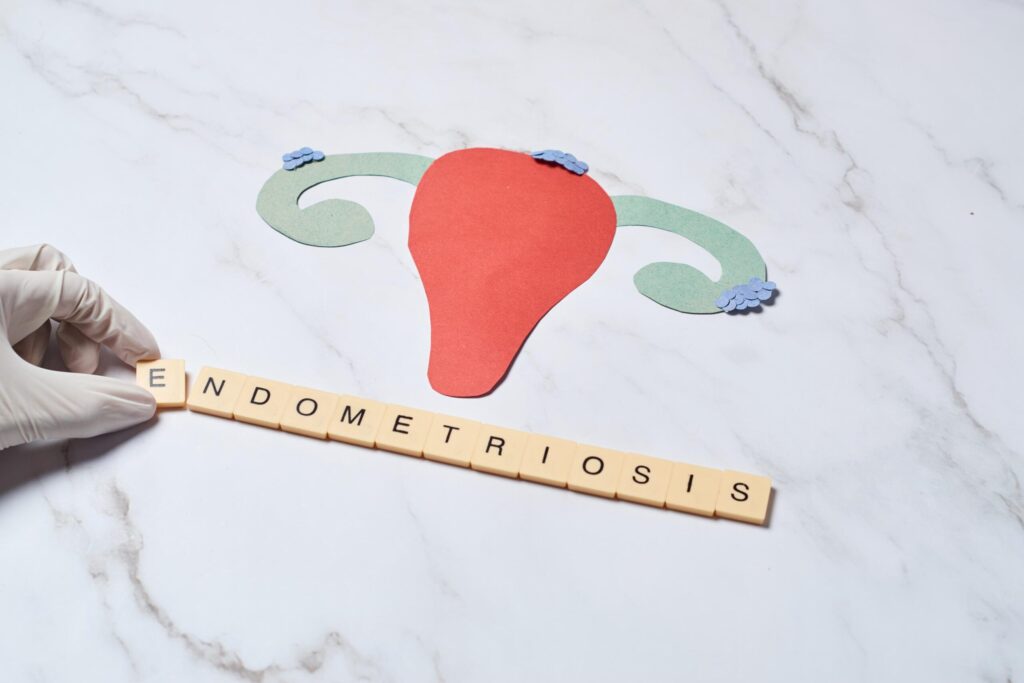
Treatment for Ovarian Cysts
What are ovarian cysts?
Ovarian cysts are fluid-filled cavities that develop inside the ovaries. They vary in size and may contain thin fluid, mucus, blood, or tissue, depending on their type. They are classified into two categories: functional and non-functional cysts.
The first category includes benign cystic formations that, in most cases, resolve spontaneously within a few days or weeks, do not require treatment, and pose no risk to the patient’s health or fertility (e.g., anovulatory cysts, corpus luteum cysts, etc.). The second category includes complex cysts with a thick wall that do not regress on their own, may negatively affect the patient’s health or fertility, and in rare cases may increase the likelihood of malignancy in the future (e.g., endometriotic cysts, dermoid cysts, cystadenomas, etc.).
Ovarian cysts are a common gynecological finding, and most women develop functional cysts at some point in their lives, often without even realizing it.
What symptoms do ovarian cysts cause?
The most common symptoms associated with the presence of ovarian cysts are the following:
- Lower abdominal pain
- Abdominal pain during exercise, sexual intercourse, or bowel movements
- Frequent urge to urinate
- Nausea
- Abdominal bloating
- Delayed menstruation
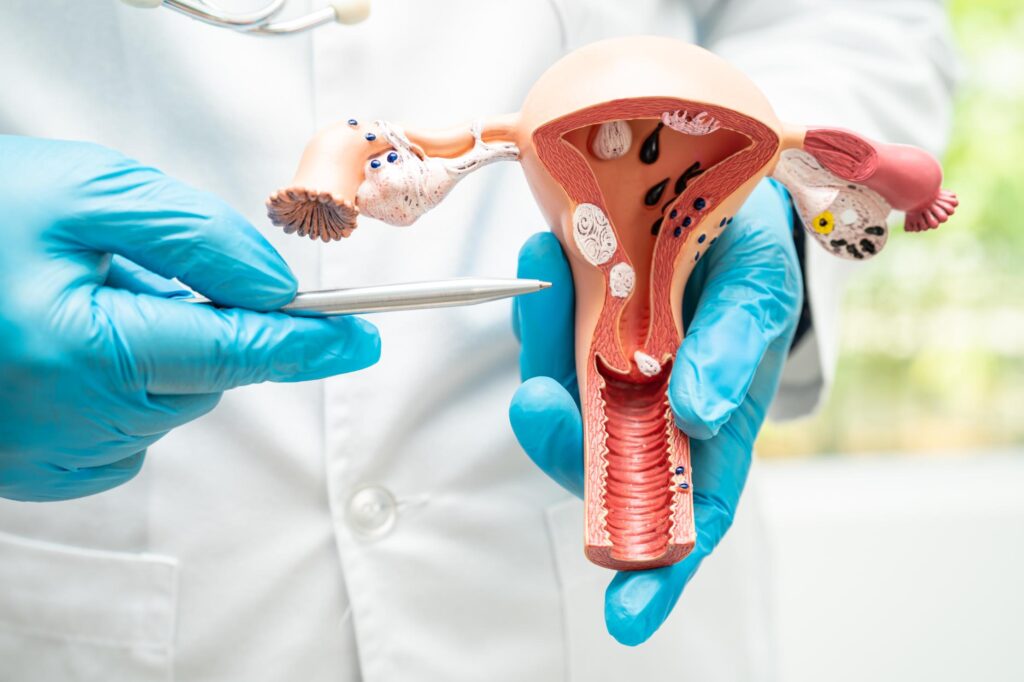

When is laparoscopic treatment recommended for ovarian cysts?
It is important to note that there is no medical (pharmaceutical) treatment for ovarian cysts. The use of contraceptive pills or antibiotics to treat this condition lacks any scientific basis, and any regression of cystic formations observed in such cases is purely coincidental.
Surgical treatment is necessary in cases of non-functional cysts, severe symptoms, or significant increase in size, and in the vast majority of cases it should be performed endoscopically, that is, laparoscopically.
Laparoscopic treatment requires general anesthesia. During the procedure, the specialized surgeon creates microscopic incisions in the patient’s abdomen, through which an endoscopic camera and fine microsurgical instruments are inserted. This allows the cysts to be operated on under high magnification. In this way, maximum precision is achieved during removal, without damaging healthy ovarian tissue and therefore without compromising the patient’s fertility. At the same time, the risk of postoperative complications is minimized, and the aesthetic result is excellent.
What tests should be performed before laparoscopic removal of ovarian cysts?
Transvaginal ultrasound is the examination with the highest diagnostic accuracy in cases of ovarian cystic formations, providing precise information regarding the number, location, size, and composition of the cysts. If there is suspicion of malignancy or advanced endometriosis, additional imaging tests (e.g., MRI scan) and specialized blood tests (e.g., tumor markers) may be requested.
What is recovery like after laparoscopic treatment for ovarian cysts?
The laparoscopic approach ensures minimal burden on the patient. Recovery is immediate, and the patient can return home on the same day. The following day, she may resume her normal activities.
During the first 24 hours, mild discomfort can be easily managed with simple oral painkillers.
Intense physical activity (gym workouts, sexual intercourse, etc.) should be avoided for 2–3 days in order to prevent abdominal pain.
Care of the small incisions involves simple spraying with an antiseptic solution twice daily, without the need for special dressings.


Why Choose Laparoscopic Treatment for Ovarian Cysts with Gynecologist Ioannis Raptis?
It is important to note that there is no pharmaceutical treatment for ovarian cysts. The use of contraceptive pills or antibiotics to address this condition lacks any scientific basis, and any regression of cystic formations observed in such cases is purely coincidental.
Surgical treatment is necessary in cases of non-functional cysts, severe symptoms, or significant enlargement, and in the vast majority of cases it should be performed endoscopically, that is, laparoscopically.
Laparoscopic treatment requires general anesthesia. During the procedure, the specialized surgeon creates microscopic incisions in the patient’s abdomen, through which an endoscopic camera and fine microsurgical instruments are inserted. This allows the cysts to be operated on under high magnification. In this way, maximum precision is ensured during removal, without damaging healthy ovarian tissue and therefore without compromising the patient’s fertility. At the same time, the risk of postoperative complications is minimized, and the aesthetic result is excellent.
Frequently Asked Questions
Can an ovarian cyst affect the menstrual cycle?
Yes, the hormonal fluctuations associated with ovarian cysts can affect the menstrual cycle. In some cases, they may cause delayed or irregular menstruation, while in others they may lead to changes in the intensity of menstrual bleeding.
When is an ovarian cyst considered dangerous?
An ovarian cyst is potentially dangerous when it grows rapidly, causes pain, or does not resolve after several weeks. It may also be concerning when it presents suspicious ultrasound features. Management additionally depends on the woman’s age, medical history, and laboratory findings.
How can the development of ovarian cysts be prevented?
The use of contraceptive pills reduces the likelihood of developing ovarian cysts. Maintaining a stable body weight and managing hormonal disorders also provide additional support. Regular gynecological examinations and ultrasound help ensure early diagnosis.
Can an ovarian cyst affect a woman’s fertility?
Certain types of complex cysts, such as endometriotic cysts, as well as large cysts, may affect ovarian function and interfere with normal ovulation. Early diagnosis and appropriate management help prevent complications that could impact the ability to conceive.
What are the possible complications of ovarian cysts?
The most common complication is lower abdominal pain on the side where the cyst is located. In some cases, rupture of the cyst may be accompanied by minor internal bleeding or more intense abdominal pain. Finally, in rare cases involving large cysts, ovarian torsion—meaning rotation of the ovary around its axis—may occur. This is an acute condition that causes severe pain and requires immediate surgical intervention.
What role does the patient’s medical history play in the choice of treatment?
The patient’s medical history is crucial. Age, reproductive plans, history of previous surgeries, and family history of malignancy are important factors that help the physician determine the most appropriate treatment.
Can an ovarian cyst cause symptoms similar to other conditions?
Yes, certain cysts may cause symptoms that mimic other conditions, such as appendicitis, salpingitis, ectopic pregnancy, intestinal colic, etc. For this reason, thorough gynecological evaluation is an essential part of the investigation of lower abdominal pain.
Are there alternative options besides laparoscopic surgery?
In the majority of cases, ovarian cysts are functional and resolve spontaneously without any intervention. Additionally, the use of contraceptive pills or other hormonal medications has no effect on ovarian cysts. Laparoscopic surgery is recommended only in cases of complex cystic formations that persist for a long period or have a suspicious appearance. It is also indicated for cysts that, due to their size, cause severe symptoms or affect fertility.
According to the scientific standards
of the German Society of Obstetrics and Gynecology
