Ioannis K. Raptis is an accredited physician (MIC II qualification) certified by the German Society for Gynecological Endoscopy (AGE) to perform advanced laparoscopic and hysteroscopic procedures of high complexity.

Ioannis K. Raptis is an accredited physician (MIC II qualification) certified by the German Society for Gynecological Endoscopy (AGE) to perform advanced laparoscopic and hysteroscopic procedures of high complexity.
Follow Us
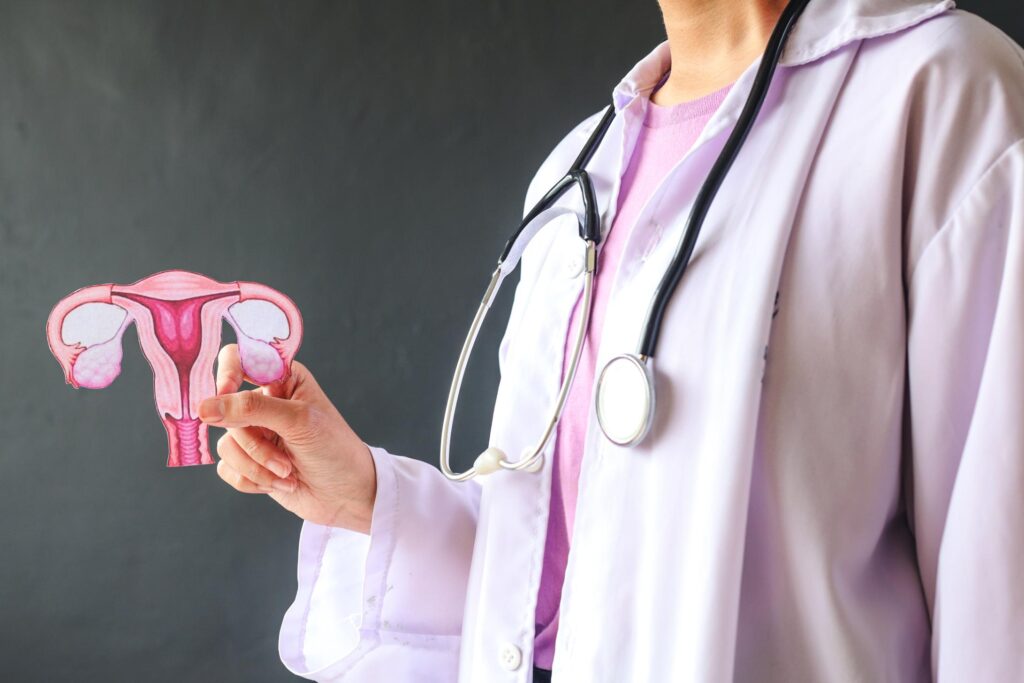
Hysterectomy is the surgical removal of the uterus in order to treat a gynecological condition. With the removal of the organ, menstruation stops and the woman is no longer able to become pregnant. However, no hormonal changes occur, as the ovaries—which produce female hormones—are not affected.
Depending on the condition, the appropriate type of hysterectomy is selected, and a decision is made regarding whether the ovaries will be preserved.
In a subtotal (supracervical) hysterectomy, only the body of the uterus is removed, while the cervix remains intact. A common indication for this procedure is the presence of multiple large fibroids in women who have completed their family planning.
In a total hysterectomy, the entire uterus is removed. Conditions in which this procedure is performed include persistent bleeding and atypical endometrial hyperplasia.
Finally, in a radical hysterectomy, both the uterus and the surrounding tissues are removed, as in cases of malignancy.
Taking into account the patient’s age, reproductive plans, medical history, and the severity of the condition, hysterectomy may be recommended as a treatment for the following gynecological problems:


In the laparoscopic approach, the procedure is performed through small incisions using an endoscope, thereby avoiding an open abdominal incision and its associated complications. This method maximizes surgical precision while minimizing the burden on the patient, ensuring faster recovery, little to no postoperative pain, minimal risk of complications, and excellent aesthetic results.
Painless laparoscopic hysterectomy Sans douleur
represents a further step toward minimizing postoperative pain. It combines modern surgical techniques with appropriate general and local anesthesia, allowing the patient to return home on the same day.
The tests required prior to a laparoscopic hysterectomy depend on the underlying condition. In the majority of cases, a transvaginal uterine ultrasound and preoperative evaluation at the clinic a few days before the procedure are sufficient for surgery to proceed.
Laparoscopic hysterectomies performed by experienced surgeons are characterized by rapid recovery. The patient may return home on the same or the following day after surgery and resume her daily activities 3–4 days later.
There are, of course, exceptions, such as in urogynecological vaginal suspension procedures and in cases of malignancy, where avoidance of physical exertion for a longer period may be recommended.
Regarding sexual intercourse, it may be resumed after a few days in cases of subtotal hysterectomy and after three months in cases of total hysterectomy, without any change in its quality.


Η αφαίρεση της μήτρας δεν επιφέρει κάποια ορμονική ή ανατομική αλλαγή. Συνεπώς η σεξουαλική ζωή μπορεί να παρουσιάσει μόνο βελτίωση, κυρίως λόγω ανακούφισης από χρόνιο πόνο ή αιμορραγία.
Η ανάρρωση μετά από λαπαροσκοπική υστερεκτομή είναι ταχεία, με επιστροφή στις δραστηριότητες εντός 3-4 ημερών, χάρη στις μικρές τομές και την ελάχιστη επιβάρυνση του οργανισμού.
Η υστερεκτομή εφαρμόζεται όχι μόνο σε κακοήθειες αλλά και σε καλοήθεις παθήσεις (ινομυώματα, πρόπτωση μήτρας, υπερπλασία ενδομητρίου κ.α.), οι οποίες προκαλούν έντονα συμπτώματα.

Χρησιμοποιούμε cookies για να βελτιώσουμε την εμπειρία σας στον ιστότοπό μας. Χρησιμοποιώντας τον ιστότοπό μας, συναινείτε στη χρήση cookies.
Manage your cookie preferences below:
Essential cookies enable basic functions and are necessary for the proper function of the website.