
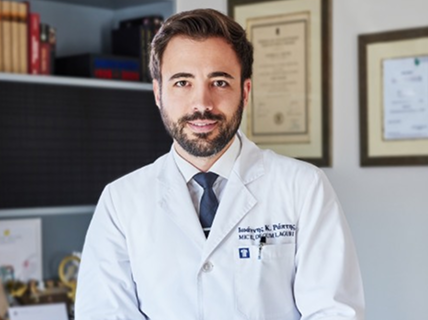
Ioannis Raptis has clinical experience from his position as Senior Consultant at the German perinatal center AKH Hagen. There, he received comprehensive training in Special Obstetrics and Perinatal Medicine (Spezielle Geburtshilfe und Perinatal Medizin) and specialized in high-risk pregnancies and complicated deliveries.
Follow us
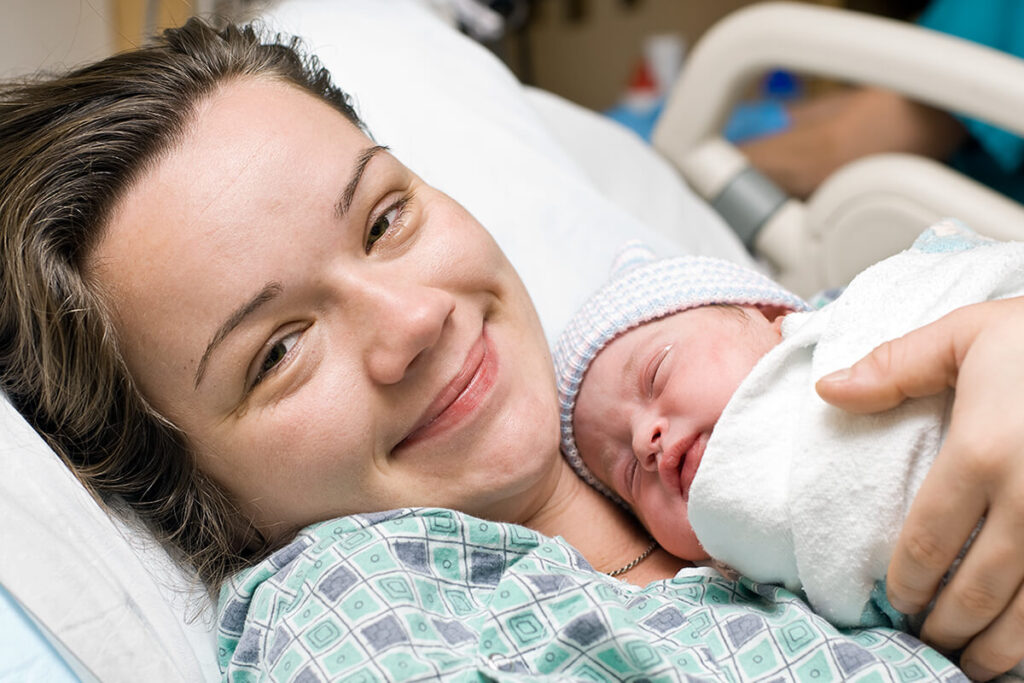
When vaginal birth poses risks to the life of the expectant mother or the baby, performing a cesarean section becomes the only option.
With the appropriate indication, the procedure is performed in approximately 15% of pregnancies and constitutes a life-saving medical intervention that has saved millions of lives.
The cesarean section using the Misgav-Ladach method is a modern technique, with clear and well-documented advantages for both mother and child compared to the classical technique.
The main difference of this improved method lies in the fact that the opening of the various layers of the mother’s abdominal wall (with the exception of the skin) is not performed with surgical instruments (scalpel or scissors) but with the surgeon’s fingers.
At the same time, this method includes a simplified and minimally traumatic suturing of the tissues and the skin.
With the classical technique, the opening of the various layers of the abdominal wall is performed using cutting instruments, which injure healthy tissues, causing more intense postoperative pain and an increased likelihood of adhesions.
Additionally, during abdominal closure, large amounts of sutures are used, which, acting as a foreign body, intensify the patient’s pain in the months following the operation.
Furthermore, microvascular disturbances caused by the sutures increase the likelihood of healing disorders or even tissue rupture in a future pregnancy.
Another disadvantage of the classical technique is the longer duration of the procedure, which may be a critical factor, especially in emergency cesarean sections, where every lost second can be crucial.
Finally, in a small percentage of procedures, superficial injury to the baby by the instrument used to open the uterus has been reported, particularly when rupture of membranes (water breaking) has already occurred.


With this method, immediately after the skin incision, the surgeon opens the various layers of the abdominal wall as well as the uterus, as much as possible, without the use of cutting instruments.
Most of the opening is performed using the fingers and by applying the necessary tension, allowing tissues, vessels, and nerves to be gently separated rather than injured.
As a result, postoperative pain is significantly reduced, as well as the likelihood of adhesion formation after the procedure.
At the same time, only those structures necessary for the mechanical and anatomical support of the abdominal wall are sutured, while other structures (uterine peritoneum, abdominal peritoneum, muscles, subcutaneous tissue) are not burdened with unnecessary sutures, allowing natural closure through the body’s own healing processes.
Additionally, a special suturing technique is used that does not constrict the tissues, thus ensuring optimal conditions for smoother and more durable healing.
The result of the above is a shorter duration of the operation, with all the associated benefits for the safety of both mother and child, especially in cases of obstetric emergency.
Finally, the likelihood of injury to the baby during the opening of the uterus is virtually zero, since the incision is made externally with a cutting instrument and completed using the surgeon’s fingers.
A large number of international studies have demonstrated the superiority of the Misgav-Ladach method compared to the classical technique. More specifically, the advantages of this technique have been highlighted in the following areas:


Performing a cesarean section using the Misgav-Ladach method has been proven to be associated with fewer short-term and long-term complications for both mother and child. At the same time, due to the shorter duration of the procedure, it represents an ideal technique in cases of emergency indication.
This technique represents another step toward a safer surgical intervention for both mother and baby, reducing morbidity and postoperative pain, ensuring the best possible medical and aesthetic outcome, minimizing the risk of wound healing disorders and uterine rupture, and allowing the possibility of a vaginal birth in a subsequent pregnancy.

Χρησιμοποιούμε cookies για να βελτιώσουμε την εμπειρία σας στον ιστότοπό μας. Χρησιμοποιώντας τον ιστότοπό μας, συναινείτε στη χρήση cookies.
Manage your cookie preferences below:
Essential cookies enable basic functions and are necessary for the proper function of the website.