
Ioannis Raptis has clinical experience from his position as Senior Consultant at the German perinatal center AKH Hagen. There, he received comprehensive training in Special Obstetrics and Perinatal Medicine (Spezielle Geburtshilfe und Perinatal Medizin) and specialized in high-risk pregnancies and complicated deliveries.
The exact cause of hypertensive disorders of pregnancy has not been fully clarified. In any case, abnormal implantation of the placenta into the uterine wall during the first half of pregnancy plays a significant role in the development of the condition.
In such cases, there is a disturbance in the way the expectant mother’s body adapts and responds to the demands of pregnancy.
As a result, disorders of the circulatory system occur, most notably the development of hypertension, as well as impaired microcirculation in organs such as the kidneys, the liver, and, in rare cases, the brain.
Diagnosis:
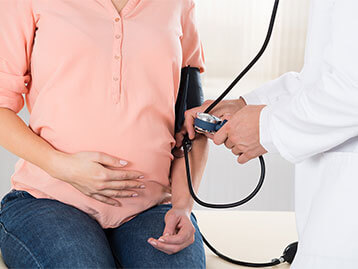
The diagnosis of these potentially dangerous pregnancy disorders is made through regular blood pressure measurement, urine testing to detect protein (proteinuria), and blood tests that reveal dysfunction in the organs involved.
Timely recognition is essential in order to prevent serious maternal and fetal complications.
Treatment:
Treatment usually includes the administration of antihypertensive medication to reduce the risk of maternal complications. However, these medications do not necessarily prevent possible progression of the disease. Magnesium sulfate plays a crucial role in preventing seizures and stabilizing the condition.
At the same time, bed rest, close clinical and laboratory monitoring, and regular ultrasound assessment of fetal growth are essential measures to minimize the risk of severe complications for both mother and baby.
The definitive resolution of symptoms usually occurs after delivery. However, in a significant number of cases, hypertensive disorders of pregnancy — including gestational hypertension, preeclampsia, eclampsia, or HELLP syndrome — may first appear or even worsen in the postpartum period. For this reason, the puerperium is a critical time during which the mother must continue to be closely monitored.
If a woman develops one of these conditions during pregnancy, low-dose aspirin is recommended in any subsequent pregnancy up to the 20th week of gestation, as it has been shown to significantly reduce the risk of recurrence.
Additionally, women who experience hypertensive disorders during pregnancy have an increased risk of developing chronic hypertension later in life. Regular blood pressure monitoring is therefore essential for early detection and long-term cardiovascular protection.
Prevention:
Unfortunately, few patients are aware that during pregnancy there are three different methods available to predict both the likelihood and the timing of hypertensive disorders.
Early risk assessment allows for timely preventive intervention, reducing the probability of disease development and identifying those pregnant women who would benefit from closer and more intensive monitoring throughout their pregnancy.
1st Trimester of Pregnancy:
Through preeclampsia screening (uterine artery Doppler, PAPP-A, PlGF), it is possible to assess whether a pregnant woman has a high probability of developing a hypertensive disorder during pregnancy.
If the calculated risk is elevated, daily low-dose aspirin therapy is initiated in order to significantly reduce the likelihood of disease development.
2nd Trimester of Pregnancy:
By performing a uterine artery Doppler examination, the risk of hypertensive disorders and intrauterine growth restriction (IUGR) can be evaluated.
If the risk is found to be high, closer monitoring and intensified follow-up are recommended to ensure timely medical intervention should symptoms arise.
At any time during the second half of pregnancy:
By measuring two biomarkers in the mother’s blood (sFlt-1/PlGF ratio), clinicians can identify those pregnant women who, despite suspected preeclampsia, are highly unlikely to develop the condition within the next two to four weeks.
In such cases, hospitalization is usually not required.
Myths and Facts:
The recommendation to reduce salt intake during pregnancy is incorrect and potentially dangerous.
The risk of developing hypertensive disorders and preeclampsia, as well as the occurrence of edema during pregnancy, is not reduced by lowering salt consumption.
Low-dose aspirin should be initiated before the 16th week of pregnancy for more effective prevention.
Preeclampsia is not a de facto indication for cesarean section.
The development of preeclampsia is influenced by genetic factors originating from both the mother and the father.
According to the scientific guidelines of the German Society of Obstetrics and Gynecology