
```html
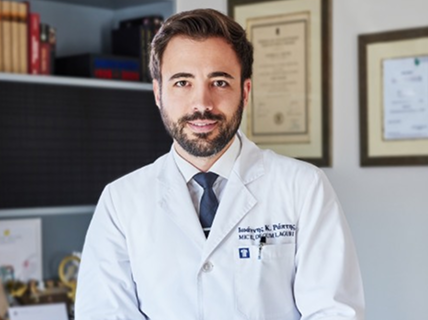
Ioannis Raptis
MIC II, DEGUM I, AGUB I
Obstetrician – Gynecologist
Ioannis Raptis has clinical experience as a Senior Consultant (Attending Physician) at the German Perinatal Center AKH Hagen. There, he received comprehensive training in Special Obstetrics and Perinatal Medicine (Spezielle Geburtshilfe und Perinatale Medizin) and specialized in high-risk pregnancies and complicated deliveries.
Follow us

Natural childbirth
Childbirth is a profoundly significant initiating process for both the woman and the fetus. The moment a pregnant woman becomes a mother and the baby takes its first breath marks a milestone in the most important relationship of the human species.
For this reason, the experience of giving birth, the way in which the pregnant woman experiences the process of labor, the conditions under which this unique event unfolds, as well as the natural approach with which it is managed when it progresses normally, can influence the emerging bond between mother and child.
What do we mean by the term “natural childbirth”?
And to what extent is it truly natural:
- The administration of medications to support labor contractions even when labor is progressing normally?
- The routine administration of epidural anesthesia and the confinement of the laboring woman to bed, even if she feels comfortable managing her contractions?
- The use of antispasmodic medication to accelerate a normally progressing labor?
- The performance of an episiotomy (a perineal incision with scissors during the baby’s delivery) as a routine practice even when there is no medical indication?
It is easy to understand that not performing a cesarean section does not automatically mean the uninterrupted progression of an otherwise NATURAL process, for women who desire it and meet the appropriate criteria.


The Concept
Natural childbirth “like at home” is an alternative birthing approach designed for women who wish to experience a more natural labor process, without compromising the safety of either the mother or the baby.
Within this framework, we monitor the natural progression of labor without the administration of medication, simply ensuring that the process unfolds smoothly and without burden to mother or child.
The entire experience takes place in a warm setting within a clinic, designed to evoke a sense of home-like comfort while moving away from the conventional and sterile hospital environment.
Key Features
A “natural” vaginal birth presupposes the spontaneous onset of labor, either in the form of contractions or rupture of membranes (water breaking).
As long as the process progresses smoothly and there is no risk to the mother or the baby, no medication is administered.
Pain is managed either conservatively with the support of specialized midwives—through exercises and the soothing properties of water—or pharmacologically with analgesics, but without the use of invasive methods such as epidural anesthesia. Of course, the latter remains available at any time, so that if the woman chooses, she can transition to the conventional (yet always rational) medical support of labor.
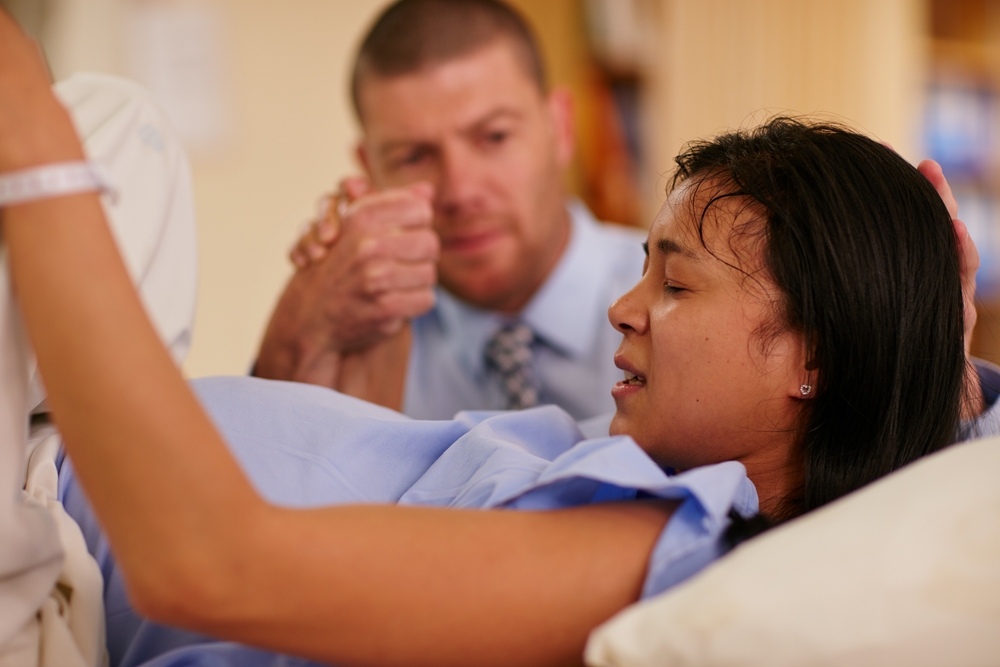
The woman is not confined to bed. On the contrary, she is encouraged to move freely, change positions, use the bathroom, read, listen to music, or watch television—just as she would at home.
Throughout the entire process, the expectant mother may enjoy the support of her loved ones, who contribute in their own way to a sense of familiarity and reassurance.

Benefits
With the spontaneous onset of labor, nature itself determines the timing of birth, a fact that reduces the likelihood of respiratory and other adaptation disorders, which are mainly associated with unnecessary inductions of labor.
The advantages include the numerous benefits of an unforced vaginal birth, primarily concerning the least possible stress for the baby and a smoother, calmer experience for the mother.
Additionally, allowing the woman to remain mobile increases the chances of a successful vaginal birth, shortens its duration, and reduces the risk of operative delivery due to abnormal positioning of the baby’s head.
Walking, standing upright, kneeling, and squatting use the force of gravity to assist the baby’s descent and facilitate cervical dilation.
Special mention should be made of the positive impact of the environment on the mother’s psychology. The high aesthetic quality of the space, warm lighting, and the use of aromas and music contribute to a sense of homelike comfort and help the woman focus more effectively on managing her contractions and performing supportive exercises throughout the process.
Finally, the baby is placed in immediate skin-to-skin contact with the mother, even before the umbilical cord is cut, thereby supporting early bonding and creating the best possible conditions for a successful initiation of breastfeeding, if the mother so wishes.
Contraindications
“Home-like” natural childbirth is not suitable for pregnant women who, for medical reasons, require labor induction with pharmacological methods.
Additionally, conditions that may require immediate medical intervention constitute a contraindication. Such conditions include breech presentation, multiple pregnancy, placenta previa, etc.
Maternal health problems that may affect the normal progression of labor (e.g., preeclampsia, HELLP syndrome, uncontrolled diabetes, infections requiring intravenous medication, etc.) are also limiting factors.

In Summary
“Home-like” natural childbirth is an alternative approach to the birth process for those pregnant women who desire it and who have an uncomplicated pregnancy.
It is characterized by non-interventional monitoring (watchful waiting) and supportive care in a warm environment under absolutely safe conditions for both mother and baby.
In this way, the benefits of an inherently natural process are maximized and the experience of vaginal birth is optimized.
When there are no contraindications, the physician should offer the expectant mother the opportunity to experience the birth of her child in an even more natural way, if she so wishes.
According to the scientific standards
of the German Society of Obstetrics and Gynecology
